

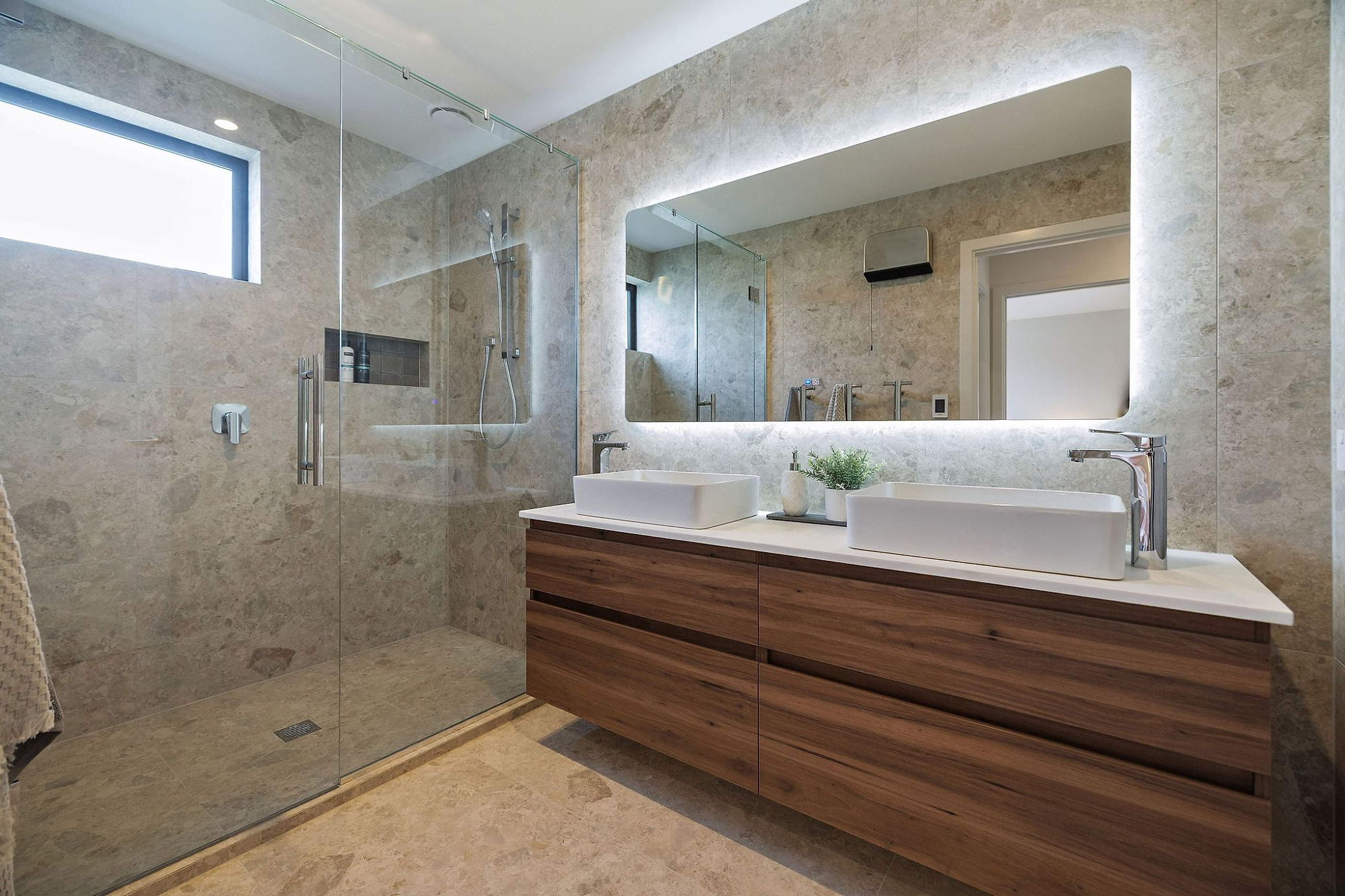
Central Otago
Architectural tile & stone installation.
Precision installation for exceptional homes. We work across Queenstown and Wānaka — one of the most demanding residential markets in the country — and take a small number of projects elsewhere in New Zealand each year.
Every tiling job fails in the same place: underneath.
Substrate that was never corrected. A membrane covered before it cured. Movement joints that were left out because they interrupt the pattern. None of it is visible at handover. All of it decides what the room looks like in year five.
That invisible work is most of the difference between our price and a cheaper one. It is also the entire reason we can stand behind ours — and the reason architects and builders bring us in before the tile is ordered rather than after.
NZBC E3/AS1
Internal Moisture
The Building Code clause that governs wet areas. It sets where the surface has to stop water and where the water has to go.
AS/NZS 3740
Waterproofing of domestic wet areas
How the membrane is built: how far up the wall, how the corners are bonded, how the fall to the waste is formed.
AS 3958.1
Installation of ceramic tiles
Substrate tolerance, adhesive coverage and — the one most jobs skip — movement joints.
A complete installation system
An exceptional finish begins with what goes under it.
Substrate preparation, waterproofing, adhesive, grout and movement control are not five purchases — they are one system, and a system only performs when every part of it was designed to work with the next. We install LATICRETE, end to end, on every project. We do not mix components between manufacturers, and we do not install a system we cannot stand behind.
We install. We do not sell tile.
We carry no material margin, so when we tell you a stone will stain or a format will not work on that substrate, there is nothing in it for us either way. Specification advice you can trust is advice from someone with nothing to sell you.
One manufacturer, from substrate to grout
Mixing a primer from one brand with a membrane from another is where responsibility disappears and where most failures start. We keep the chain intact so there is exactly one answer to who stands behind it.
A technical team behind the detail
An unusual substrate, a format at the edge of what the adhesive is rated for, a junction the drawings do not resolve — these get answered against the manufacturer's technical data before we commit to them, not guessed at on site. That is most of why we do not switch systems.
The specification is read before the tile is ordered
We take the drawings and the schedule and check tile format against substrate, falls against waste positions, movement joints against the structure, and trims and mitres against the detail drawings — while changing any of it is still free.
What needs correcting is identified before we start
Almost every project needs some substrate rectification to take the specified system. We identify it up front and price it as a defined variation, in writing, before work begins. Nobody finds out halfway through.
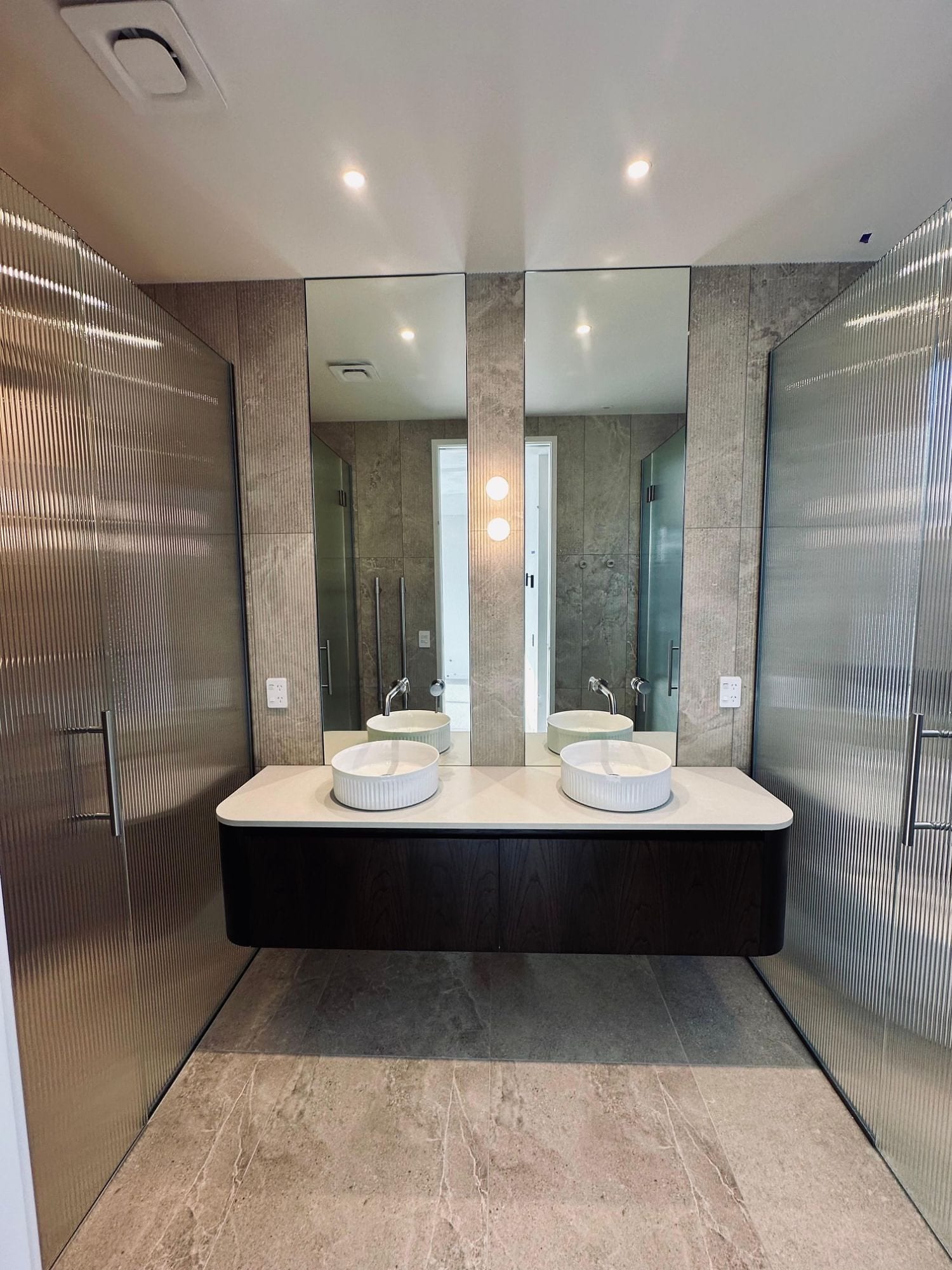
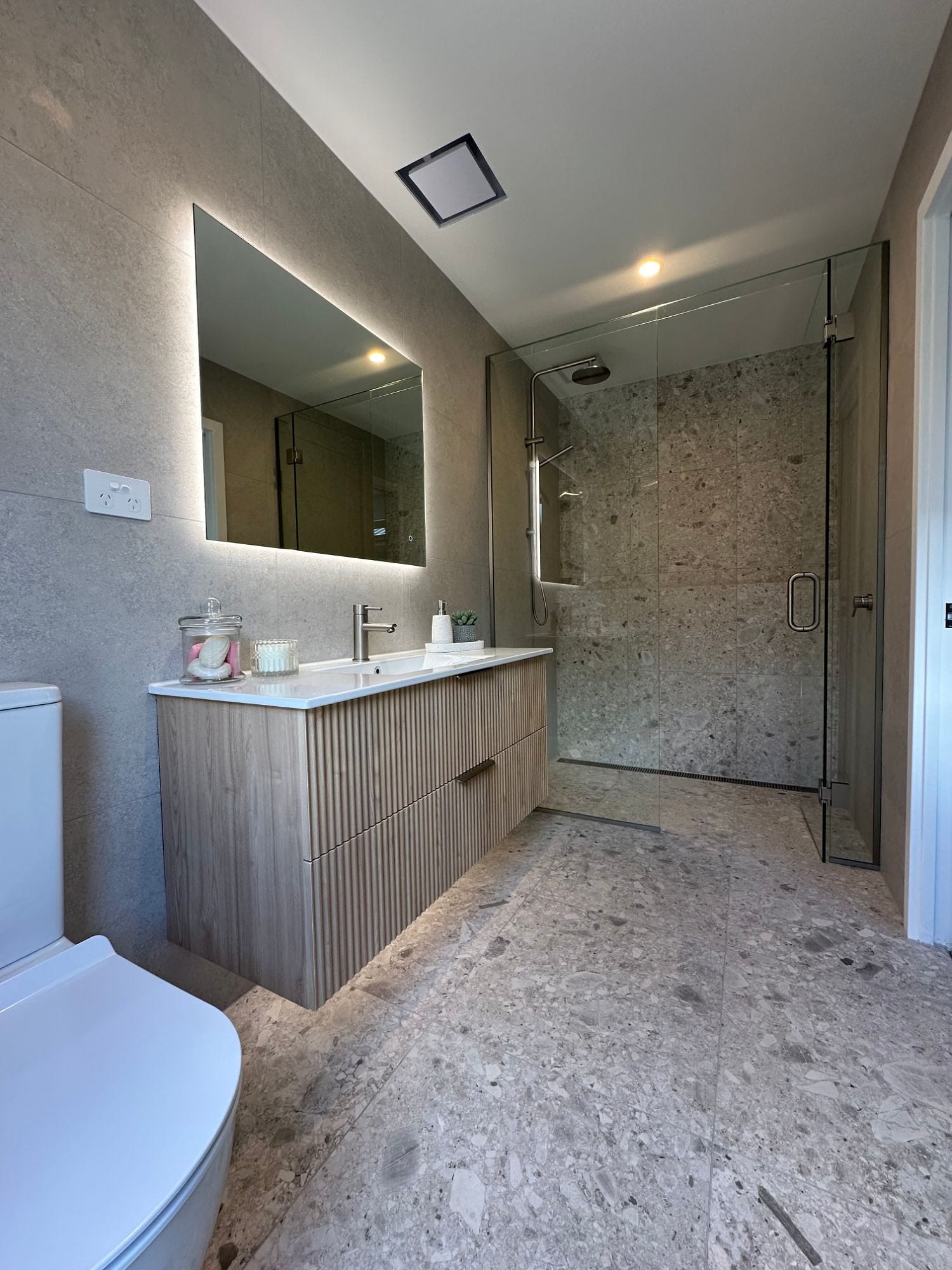
What we do
Selected projects nationwide
Send us the drawings. We will tell you what the detail actually needs.
Our base is Central Otago and most of our work is in Queenstown and Wānaka, building for architects and for clients who will not accept a compromise. We take a small number of projects elsewhere in New Zealand each year, on the same terms.
Discuss your project